

[ad_1]
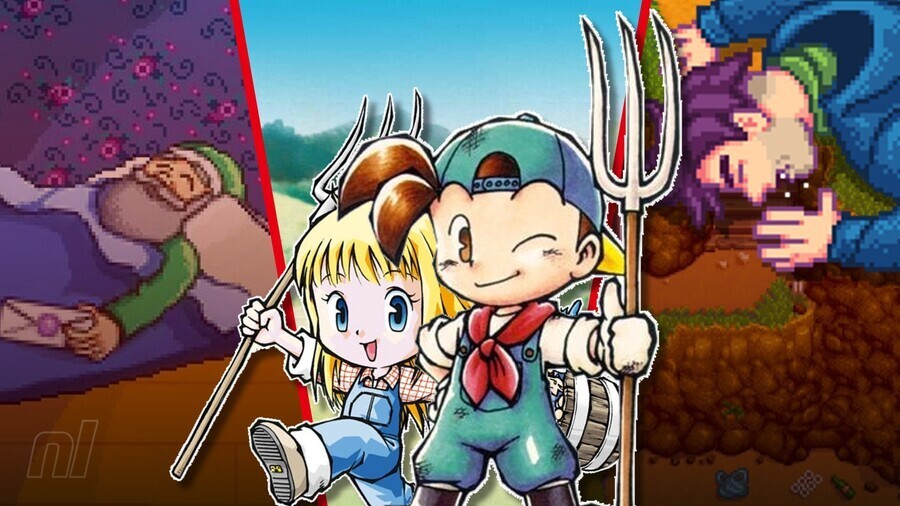
Over the vacations we’re republishing some selection options from the final 12 months. A mixture of speaking factors, interviews, opinion items and extra from NL employees and contributors, you will discover our traditional mix of thoughtfulness, experience, frivolity, retro nostalgia, and — in fact — enthusiasm for all issues Nintendo. Blissful holidays!
In August of 1996, the identical 12 months that Spice Ladies launched their debut single and The English Affected person swept awards season, just a little sport referred to as Bokujō Monogatari got here out in Japan on the Tremendous Famicom. All indicators pointed to it being a flop: its improvement had been affected by chapter and downsizing; it got here out on a last-generation console simply after the discharge of the Nintendo 64; and worst of all, it was a sport about… farming. This was an period the place children needed to fly spaceships and save princesses, not until soil and pull weeds.
However one thing about Bokujō Monogatari captured the creativeness of Japan’s players, and though its gross sales weren’t stellar — simply 20,000 gross sales at launch — it was widespread sufficient to make it over to North America a 12 months later, and Europe six months after that, rebranded as “Harvest Moon”.
Capturing the creativeness
I’ll always remember the second I noticed that on display. It was fairly wonderful, and I knew we might do that
Harvest Moon was impressed by producer Yasuhiro Wada’s childhood within the countryside, contrasted together with his life within the busy metropolis of Tokyo. A sport based mostly round farming appeared like a horrible thought in an age of action-packed releases, however Wada knew they had been on to one thing. “When you labored on the land, you needed to return and see,” he stated in a GDC postmortem in 2012. “We noticed the primary sprout appeared… It could sound easy proper now, however I’ll always remember the second I noticed that on display. It was fairly wonderful, and I knew we might do that.”
Harvest Moon on the SNES met with average success — over 100,000 copies bought, which wasn’t dangerous for a sport about animal husbandry and agriculture — however the Sport Boy sequel indicated an enormous swell in curiosity, with 300,000 copies bought. Harvest Moon had captured one thing within the creativeness of players — and had unknowingly lit a spark within the chest of a younger boy named Eric Barone.
An thought bears fruit
Eric Barone was born in 1984 on the west coast of America. Like many children born within the late ’80s and early ’90s, he was completely aged for the golden age of gaming within the dying years of the twentieth century: Earthbound, Last Fantasy III, and Chrono Set off all got here out across the time he turned ten, however Harvest Moon was his favorite.
In a GQ profile, Barone spoke about how Harvest Moon earned satisfaction of place in his coronary heart. “I preferred that you might have relationships with the townsfolk,” he recalled. “That was one thing you could not do in most video games I performed as a child, and it made the expertise way more private. That you just had been residing in a world that felt alive, time moved ahead with or with out your enter. It was straightforward to think about that the world was very a lot alive.”
Like round 300,000 different children, Barone adored the Harvest Moon collection for what it did otherwise, and like a number of these children, he finally turned disillusioned with the collection for refusing to… nicely, to do issues otherwise. Harvest Moon turned caught in its methods, and finally — following the discharge of Associates of Mineral City and A Great Life in 2003 — the collection started to say no. No Harvest Moon sport has managed to crack a Metacritic 80 for the reason that GameCube’s Magical Melody in 2005.
Barone would place the decline even earlier, saying that the collection had grow to be “progressively worse after Harvest Moon: Again to Nature,” a sport launched on the PlayStation in 1999. However his personal take — as a result of, sure, you understand that is steadily constructing in the direction of the event of Stardew Valley, essentially the most profitable farming sport of all time — would come about largely by way of a collection of accidents.
The germination of Sprout Valley
Barone graduated from the College of Washington Tacoma in 2011, with a level in laptop science, and tried to get a traditional job to fund a traditional life together with his associate. That ordinary job by no means fairly appeared to materialise, and he as a substitute channelled his free time into studying to make video video games. His frustration with the Harvest Moon oeuvre manifested in a sport referred to as Sprout Valley — made below his developer pseudonym ConcernedApe — which he supposed to be the Harvest Moon he had all the time needed, however by no means bought.
The gameplay in Harvest Moon was often enjoyable, however I felt like no title within the collection ever introduced all of it collectively in an ideal method
“The gameplay in Harvest Moon was often enjoyable, however I felt like no title within the collection ever introduced all of it collectively in an ideal method,” stated Barone in an interview with Sport Developer (then Gamasutra). “My thought with Stardew Valley was to deal with the issues I had with Harvest Moon, in addition to create extra ‘function’ with tried-and-true gameplay components similar to crafting and quests.”
Over 4 years of improvement, Sprout Valley turned Stardew Valley. And Stardew Valley turned successful that nobody might have predicted.
Reaping what others have sown
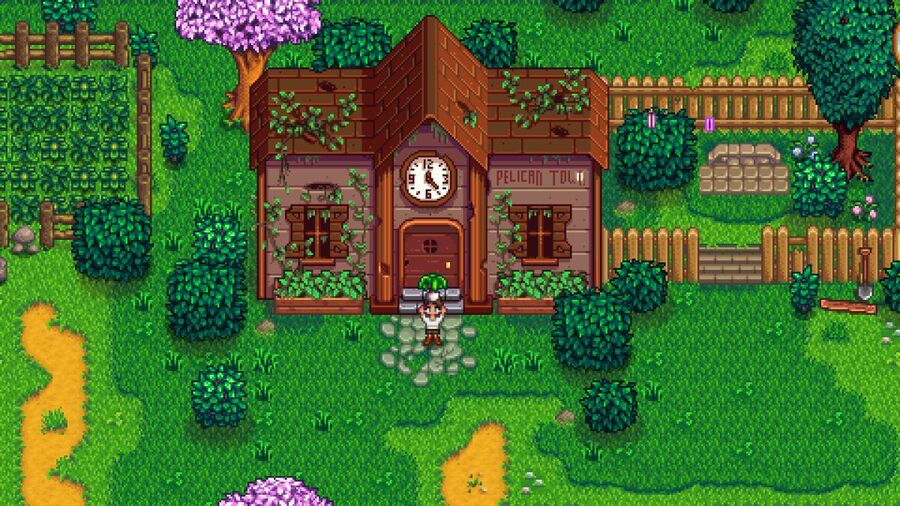
Clearly, Barone’s work in revitalising the farm sim paid off. that. Stardew Valley has bought over 20 million copies, way over any Harvest Moon sport ever did. It captured the hearts of people that had performed Harvest Moon on the SNES, Sport Boy, N64, and GameCube, but it surely did extra than simply that — it awoke one thing in individuals who did not even learn about Harvest Moon within the first place.
As Barone had observed, Harvest Moon had been in decline for a while. It is tough to know why, or when — however taking a look at what Stardew Valley dropped at the desk, it is just a little simpler to see the place the failings had been. Probably the most evident one, for a lot of gamers, was the shortage of same-sex marriage.
Harvest Moon video games have all the time been just a little behind the occasions, which is maybe not wholly stunning in a collection set in rural cities with only a handful of characters. Harvest Moon DS Cute — a spin-off of the unique DS sport with the twist that it allowed the participant to play the identical sport, however as a lady — was the primary Harvest Moon sport that allowed gamers to marry one other lady, however the sport referred to as this marriage the “Finest Associates” system, which for a lot of is worse than simply leaving out same-sex marriage altogether.
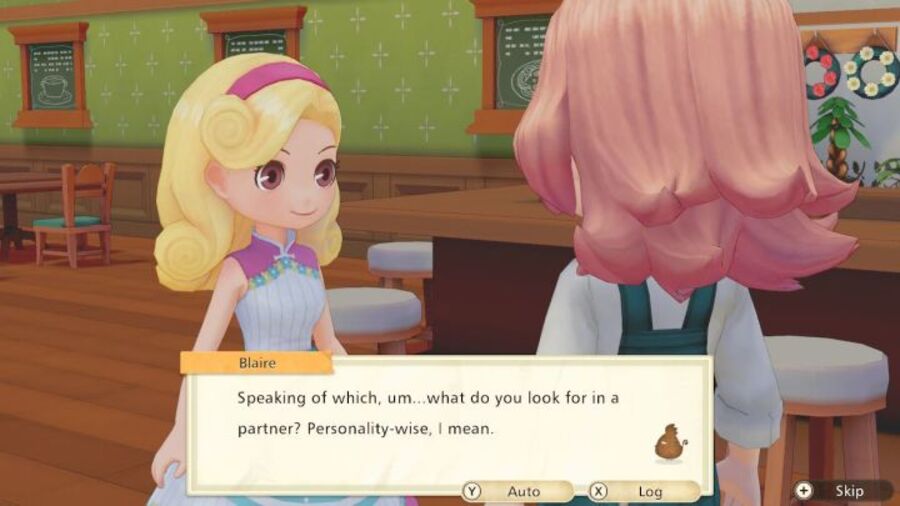
Moreover, same-sex marriage was really eliminated from the North American launch, and it would not be till Story of Seasons: Associates of Mineral City, a 2019 remake of the GBA sport, that same-sex marriage would return — and in Japan, it was nonetheless often called the “Finest Associates” system.
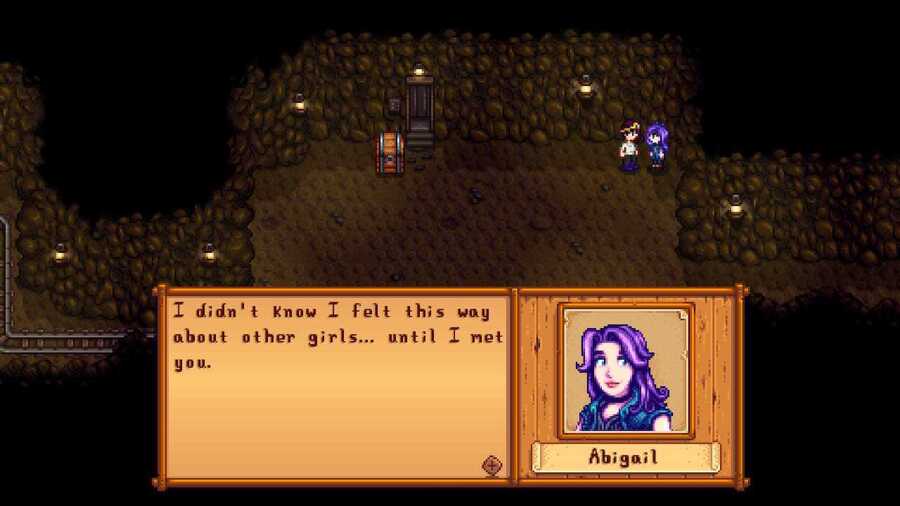
Stardew Valley had no such qualms, and included same-sex marriage from the beginning. There are even a couple of dialogue modifications to acknowledge it, with one bachelorette’s cutscenes altering the gender of her ex to match yours, and a few characters stating that they’ve “by no means felt this fashion” about somebody of the identical gender earlier than. It isn’t laborious to imagine that Stardew’s extra progressive attitudes might have impacted the Harvest Moon video games in flip, for the reason that Associates of Mineral City remake (the one which introduced again same-sex marriage) would come out three years after the discharge (and big success) of Stardew Valley.
Trendy society is difficult, and other people flip to simplicity and artisanry to flee all of it and achieve a way of management. What offers you extra management than rising your personal meals?
One other innovation that Barone added to Stardew Valley was an anti-capitalist storyline, wherein the participant can select to dismantle the ominously monolithic Joja Corp, a grocery store chain that appears to be Fb, Amazon, and Google all rolled into one, with a bonus serving to of native air pollution and thinly-veiled evil. Maybe this simply hit on the proper time, since… nicely, 2016 was a tricky 12 months for a lot of. Nevertheless it additionally tied neatly in with the pastorality of the style.
Trendy society is difficult, and other people flip to simplicity and artisanry to flee all of it and achieve a way of management. What offers you extra management than rising your personal meals? Joja’s intrusion into this sedate, peaceable life represented the difficult trendy world making an attempt to claw its method again in and promote you a brand new number of Coke. Gamers typically weren’t , and the sport allowed you to fulfil the fantasy of kicking firms to the curb.
A subject left fallow
However the Harvest Moon collection — which is now referred to as Story of Seasons, following a considerably messy schism between developer and writer in 2014 — has but to essentially come near Stardew Valley’s heights, and even to know what it was that Stardew did otherwise. It appears unusual, that one sport can encourage one other sport, but fail to know what it’s that was inspiring about themselves within the first place, however that is the state of affairs we discover ourselves in. Story of Seasons developer Marvelous XSEED’s newest launch, Pioneers of Olive City, tried to do one thing new and failed fairly miserably — this is a quote from our evaluation:
How does Story of Seasons proceed to innovate when Stardew Valley and Animal Crossing have accomplished a lot to develop the 25-year-old method? Properly, with Story of Seasons: Pioneers of Olive City, the reply is twofold: one – borrow the concepts of Stardew Valley and Animal Crossing, and two – change issues for the sake of adjusting them, and see if it really works.
Spoilers: It did not work.
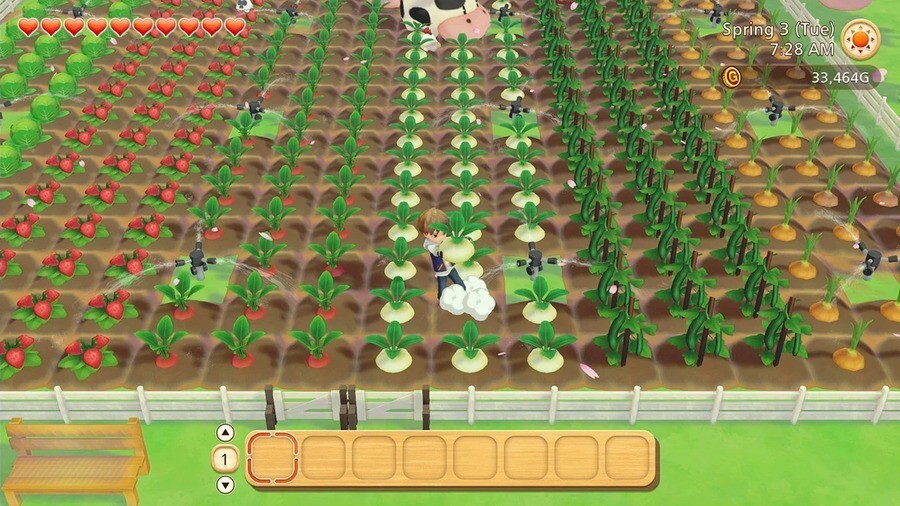
The present state of affairs is that, if we assume that solely half of people that purchased Stardew Valley really performed and loved it, there are not less than 10 million individuals who actually like farm sims. Many builders have tried to make a seize for Stardew’s crown (which was itself pilfered from Harvest Moon years in the past, who dropped it and did not even discover) — My Time at Portia, Coral Island, Monster Harvest, Littlewood, Rune Manufacturing facility, and extra — however none have captured the creativeness and the zeitgeist like Stardew did.
Perhaps the zeitgeist has handed. Perhaps individuals simply aren’t as farm-crazy as they had been in 2016. However I doubt that, partly as a result of I am nonetheless farm-crazy (and since there’s nonetheless a barn-full of upcoming farm sims on the way in which). I am nonetheless chasing that dragon, looking for one thing that hits nearly as good as Stardew, and even nearly as good because the Associates of Mineral City remake on Change, and I’ve but to search out one thing that is straightforward to sink 200 hours into. However in an ever-changing world, there may be all the time one thing compelling about farming video games, whether or not it is pure escapism, or one thing deeper, like the necessity to think about a world wherein you’ve gotten a modicum of management over your personal happiness.
Magical haunted ghost chocolate
Eric Barone, or ConcernedApe, is presently engaged on his subsequent sport, Haunted Chocolatier. After devoting ten years of his life to a farm sim that was born from his love of — and disappointment with — Harvest Moon, Haunted Chocolatier guarantees to hold a lot of the identical DNA, however with a twist or two up its sleeve. He described his new sport in a information submit on his web site as a break from the “extra humble” strategy of Stardew Valley. “I needed to discover extra fantastical prospects… experiences that take you past the abnormal. That’s the place magical haunted ghost chocolate is available in.”
“With Stardew Valley,” Barone added, “I felt considerably constrained, as a result of I used to be working inside a longtime custom.” He stated that he was engaged on the “meat and potatoes” of the sport — the mechanics, the fundamentals — however “what actually brings a sport to life is the spice, the sauce. And I haven’t actually gotten to the sauce but.”
Maybe that is what the Story of Seasons collection additionally wants — to step again from its myopic view on what a farm sim “must be”, and make one thing that is just a little extra uncommon. One thing with spice. Stardew Valley was born from somebody loving one thing a lot that they got down to make a model that was all the pieces they needed, and no developer is best positioned to do this with their very own physique of labor than Marvelous XSEED, who additionally develop and publish the Rune Manufacturing facility video games. If they need a slice of the Stardew pie, then they’ve the substances already. They invented the substances.
If [Marvelous XSEED] need a slice of the Stardew pie, then they’ve the substances already. They invented the substances.
I feel it is telling that Barone hasn’t simply retired together with his multi-million greenback Stardew fortune. He might simply by no means work a day in his life once more, if he needed. However he is nonetheless sitting at a desk, making video games. As a result of he loves making video games. That is a part of the key sauce that Barone talked about (the sauce that additionally goes on the Stardew pie, presumably; sure, it is a complicated metaphor) — loving what you do, and making what you’re keen on.
On the finish of the day, it is not about scrabbling for a slice, or making an attempt to reverse-engineer the recipe; it is about making a pie since you love pie, and also you wish to make a extremely, actually good pie. It is making a pie that you simply wish to eat.
Barone will get it. “One of many issues that is particular about indie is that it is type of a private connection between the creator of one thing and the viewers,” he informed PC Gamer shortly after Stardew Valley got here out in 2016. “It’s this uncooked connection… I feel perhaps individuals are prepared for that form of factor.”
[ad_2]
Source link
